

‘Look at That’: A Confidence Game for Fearful and Reactive Dogs
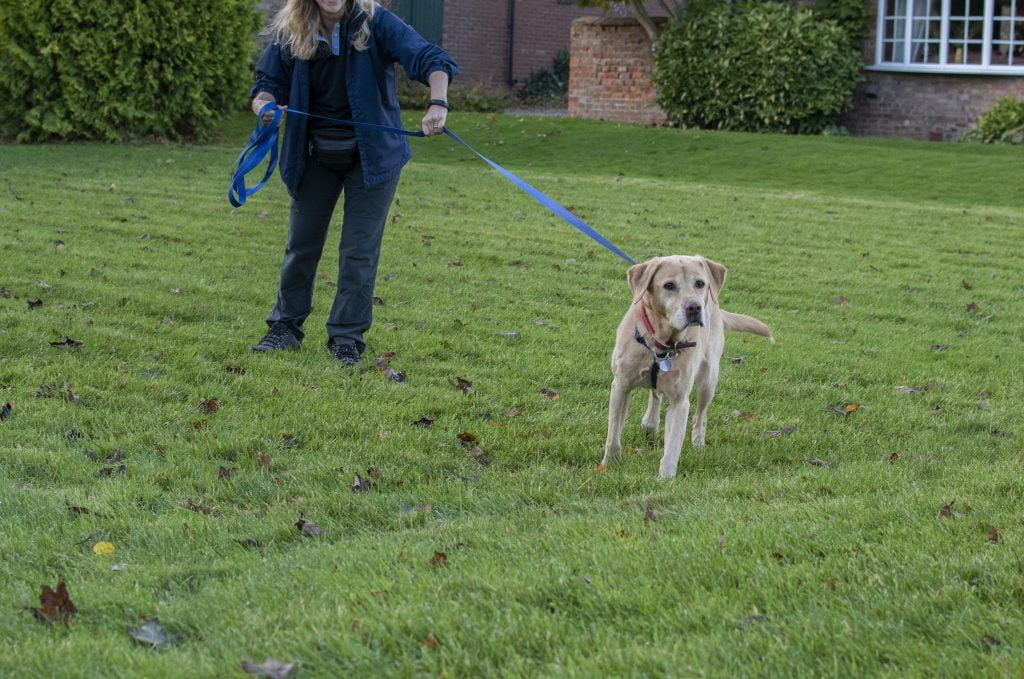

The idea of this training is to give a dog a cue to look at the object of their fear when they are under threshold and for you to mark and reward them when they do. This way they begin to link the presence of the scary thing with something good happening. It isn’t suitable for dogs that are extremely reactive or dogs that use offensive aggression but it can help dogs that tend to avoid looking at something scary which can make counter-conditioning more difficult.
At its heart, this is a technique for the worried or anxious dog, the one who finds certain things in their world frightening, such as other dogs, people, traffic or sudden noises. Instead of asking them to ignore what scares them, it gently teaches them that the scary thing predicts something good. Over time this can soften how they feel about it and help ease a fear-based reaction, while quietly building their confidence and sense of security. As with all work of this kind, we always keep the dog at a distance where they still feel safe.
Other Benefits
- It conditions a dog to look back at us in anticipation of good things happening when they see the scary thing in the environment, giving us some control and linking in with counter-conditioning.
- It gives a dog a greater sense of control over their environment.
- The way a dog responds helps us assess how they feel and this opens up the lines of communication.
The Training Steps
- Find somewhere safe and free from distractions. The dog must be relaxed and below threshold.
- It’s better for this training to begin working with ‘stooges’. Control the distance between the dog and the ‘stooge’.
- To encourage a dog to look at the ‘scary thing’ create some movement. For example ask a ‘stooge’ to walk or move around (with a dog if that is the object of their fear) or even make a noise (not too loud) so they take notice.
- Timing is crucial. As they look in the direction, mark with “Yes” or “Good” (or a clicker).
- As they turn to look at you, reward with a highly valued reward.
- What we want to teach them is that looking at the scary thing, and then back at you, is what gets them the reward.
- Repeat this process, making sure they stay under threshold.
- Don’t be in a rush to move the target closer. The idea at this stage is just to reward the dog every time they look at the frightening stimulus.
- Once they are doing this consistently, add the cue, “What’s that?” in a happy, relaxed tone of voice.
- If a dog stares, becomes aroused, stops taking treats or won’t play, you will need to take a step back in the training and increase the distance from the target. This two-way conversation builds trust and enhances their sense of security.
- Once a dog is trained, they begin automatically to turn to look at us when they see the scary thing, in anticipation of a reward. This is what we want.
- This training can be used alongside ‘Watch Me’. Having the option of both cues can be helpful.
The link below provides a useful video demonstration by ‘Train Me Please’ showing how this training works in practice. ‘Look at that’ is another verbal cue that can be used. Whatever cue we use, it must be consistent. However, in all other aspects the principles of the training are the same.


