The Disengagement Signal: A Calm Cue for Anxious and Reactive Dogs


This training technique, adapted by Sarah Heath and Jon Bowen, is a simple signal, designed to let your dog know that you wish to end an interaction with them or that you want them to disengage/stop what they are doing.
Once learned, it opens up the lines of communication and prevents them getting frustrated which can lead to anxiety and other problematic behaviours. This cue is not and should not be used as a punishment. Because it gives a dog a calm, predictable way to be told an interaction is over, the disengagement signal can be a genuinely useful tool for dogs who struggle with anxiety, frustration or over-arousal. It’s particularly helpful where frustration tips into reactivity, and it can play a supporting role in cases involving aggression, since so much of that behaviour has its roots in frustration and poor communication. Rather than leaving a dog confused about what’s expected, it replaces uncertainty with a clear, consistent cue, which is often where calmer behaviour starts.
What I like about this training is that it often transmutes in to other areas of a dog’s training and so helps prevent misunderstandings.
The Training Steps
- Two people sit or stand a few feet apart, each with a training pouch or a pot filled with small food treats.
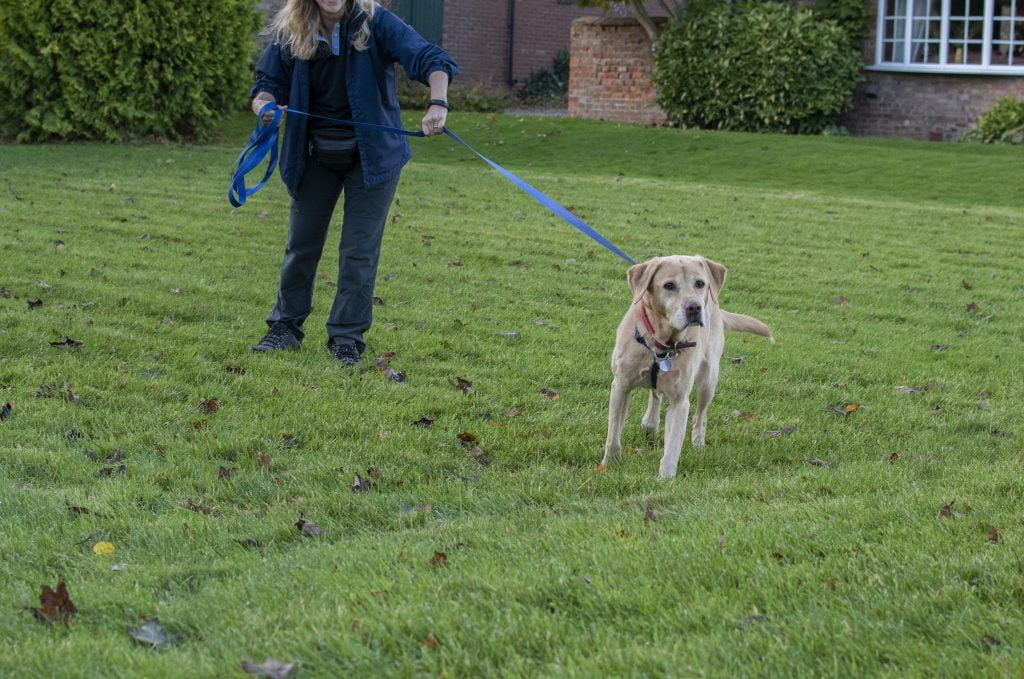
- One person starts by calling the dog over and then asks them to perform a known simple cue such as sit or down. This must be requested in a calm tone. If the dog does not immediately respond wait a few moments and ask again — do not get angry.
- Whilst the dog is responding give a series of rewards. Remain relaxed and do not put your hands near the food in between rewards.
- If the dog gets up before you have finished – ask him/her again in the same calm tone of voice.
- After between 5-10 successive rewards you can end the interaction by looking away (but not turning your back) from the dog and say ‘Ah Ah’ calmly. Do not use an angry tone of voice and remain relaxed. You may choose to use another word or cue such as: Not That, No thank-you, – whatever you like. Just make sure it is a phrase or word that comes across easily and calmly and use it consistently. Try and avoid using NO as that word can sometimes come across in a negative and sharp tone.
- When you have given the cue, the other person immediately takes that as their cue to call the dog over and they then repeat the procedure.
- Initially the dog will be confused and will stay around the person who has just finished their turn. However, most dogs don’t take long before they are quickly moving towards the other person as soon as the phrase you choose has been given. A houseline or recall line may be useful to help back up the recall if your dog is having difficulty.
- Continue to do this every day until you can see that this signal is working effectively.
- Practice using the word in other contexts too. For example you can also use the disengagement signal at the end of a play session to let a dog know when playtime is over. Following up by using a ‘Settle’ or ‘Calm’ cue can help them relax further.
- When issuing the disengagement cue, always remember to praise the dog for their appropriate response.
- When your dog is responding reliably you can gradually fade out the rewards.
Used consistently, this simple signal does far more than end one interaction. It builds a shared language between you and your dog that reduces misunderstandings, eases frustration and supports calmer, more confident behaviour over time.