Managing and Mitigating Aggression: Protocol for Dealing with Conflict Between Cohabiting Cats

It can be distressing when cohabiting cats show aggression towards one another and can be even more upsetting when it occurs between cats that previously got along.
Conflict can occur when another cat is introduced to the home, so it’s very important to follow a structured policy when bringing in a newcomer. Gradual and positive introductions are recommended and you can find help for that here.
Changes to what was previously a good relationship can be more puzzling but it is usually triggered by something. Finding out what that something is can be a bit challenging. However, disruptions to the routine, renovations in and around the home, other cats in the neighbourhood, a trip to the groomer or vets (where ‘alien’ scents can be picked up and disturb the ‘clan’ scent) or underlying medical conditions/pain are just a few.
For a cat whose behaviour towards another/others has altered, its a good idea to take them for a thorough veterinary examination. A visual/hands on exam is great and can detect quite a lot however cats hide pain well so blood samples can often reveal much more and detect any underlying medical conditions. Once medical issues have been ruled out it is worth reflecting on what might have brought about the change. Look for triggers and make a list. You may find logging these helpful and you can find a template for that here
Depending on the level of ‘aggression’, as an immediate response, here is some basic behavioural ‘first aid’ advice:
- When aggressive outbursts occur between familiar cats, distract them as soon as possible.
- Never lift them up when they are behaviourally aroused as this might lead to redirected aggression, causing serious injuries.
- Avoid using anything with a shrill noise as this can frighten and startle them which may compound the problem. Toys with bells rolled across the floor are ideal. Then separate them calmly.
- For mild altercations (hissing, spitting), it’s usual for cats to disperse to different locations. With a little time, most usually simmer without any real issues.
- For a moderate altercation (hissing, spitting and swiping) separate the cats immediately, placing them in familiar locations with their own set of key resources.
- Allow the cats to recover and calm down.
- Synthetic pheromones containing the Cat Appeasing Pheromone (e.g. Feliway Optimum) have been shown to reduce cohabitation problems so using this in the environment may be helpful.
- During this time caregivers should operate a time-sharing policy in the hub of the home so that each cat gets some time to be with you, as confinement for lengthy periods might trigger stress.
- Using puzzle feeders can help refocus a cats attention and keep them happier for periods alone – but always make sure they are not too difficult to begin with, they have been introduced to them and help them learn how to use them.
- Before reintroductions, the cats must be showing signs of relaxation and freedom from stress.
- Reintroduce the cats, following the steps in Introducing New Cats to a Home with a Resident Cat (https://www.petcourses.co.uk/free-resources/introducing-new-cats-to-a-home-with-a-resident-cats).
- The aim is to proceed with gradual, positive introductions.
- For repeated problems or more serious conflict (fighting) keep them separated and seek professional advice from a suitably qualified feline behaviourist.
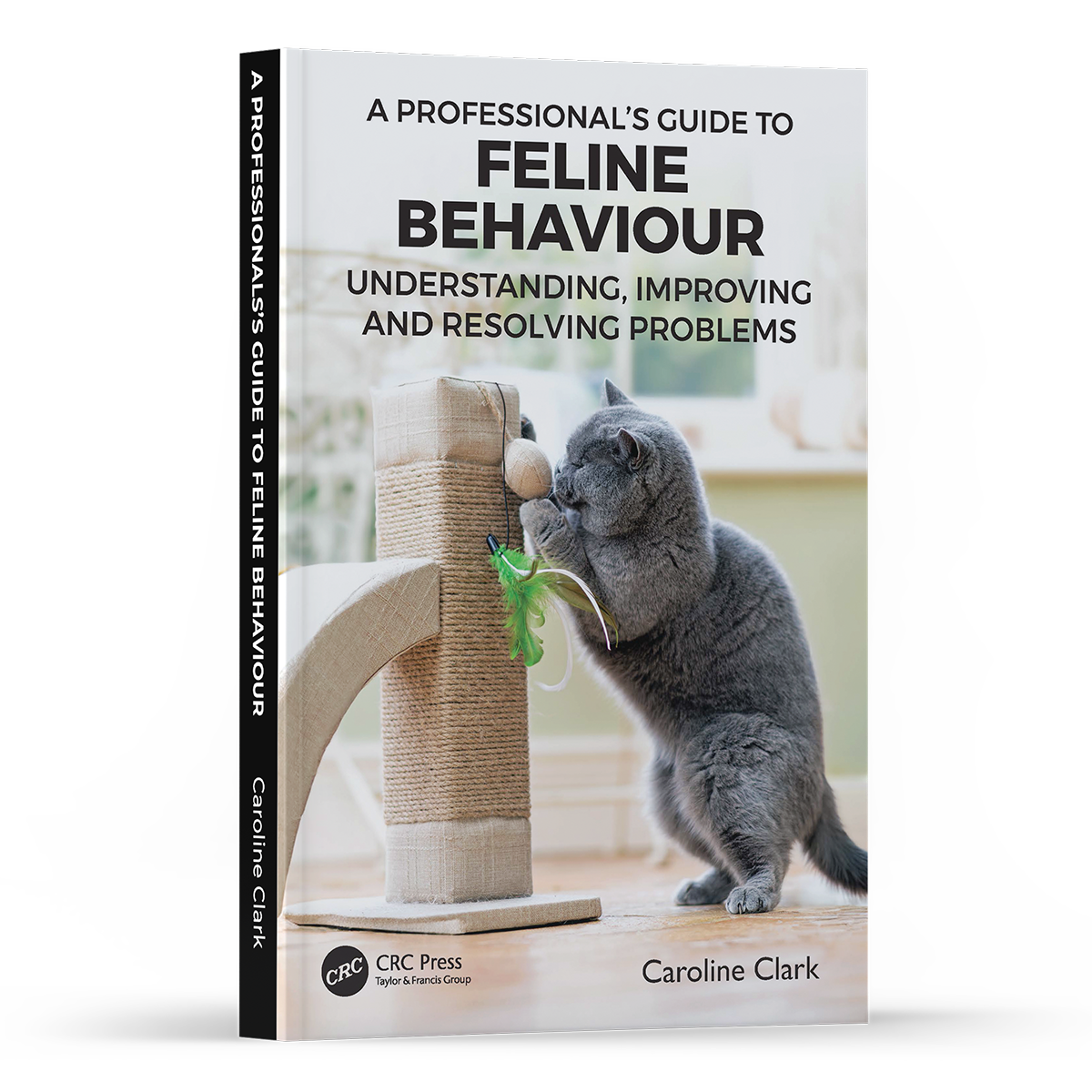
- This advice was taken from my latest book: A professional’s Guide to Feline Behaviour. It’s been written for cat lovers of all levels and provides comprehensive information about feline behaviour, including how to manage behaviour problems such as this one.