Relax on a Mat: Helping Your Dog Feel Calm and Secure


Having a specific mat (or blanket) to relax and chill out on is useful for all dogs, but especially so for those that are fearful and anxious. Relaxation is fundamental to desensitisation and counter-conditioning protocols, and once a dog is trained, just seeing and resting on it can induce feelings of relaxation that offset stress and anxiety.
To enhance the mat as a place to relax, you can use herbal aromas, dog-appeasing pheromones, or an article of your worn clothing with your scent on it.
The mat or blanket might be placed on top of an existing bed, but the idea is that it can easily be taken out and relocated wherever you want it to help induce calmness and familiarity.
The Benefits
This training can be used for inducing relaxation:
- During programmes of desensitisation and counter-conditioning (DS/CC).
- When crate training, creating dens, and doggy safe spaces.
- When habituating a dog to be alone.
- As part of a treatment protocol for separation anxiety disorders.
- When travelling or being transported.
- In boarding kennels or grooming parlours.
- For veterinary examinations and hospitalisation.
It might take several weeks to complete the training, but once a dog begins to understand the cue, they often learn surprisingly quickly.
The Training Steps
- Place the mat on the floor.
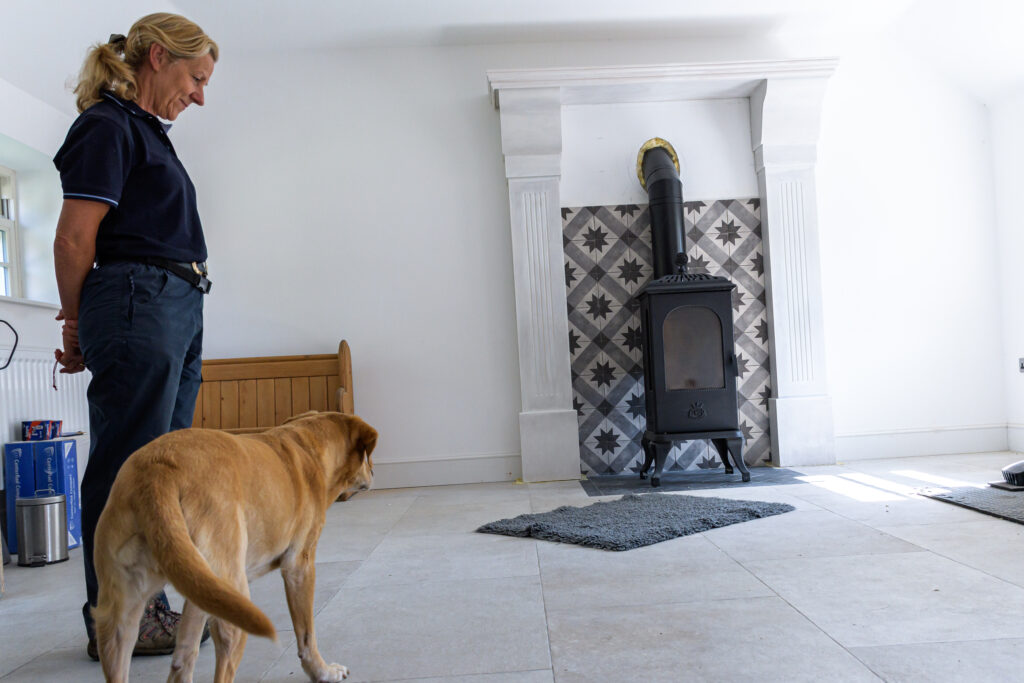
- To start with, even if the dog just looks at the mat, verbally mark the behaviour (or click) and reward.
- When using food rewards, throw the treat a small distance away to encourage them to move away from the mat.
- Once the dog understands that coming towards the mat earns the reward, make the training slightly harder by moving away from the mat.
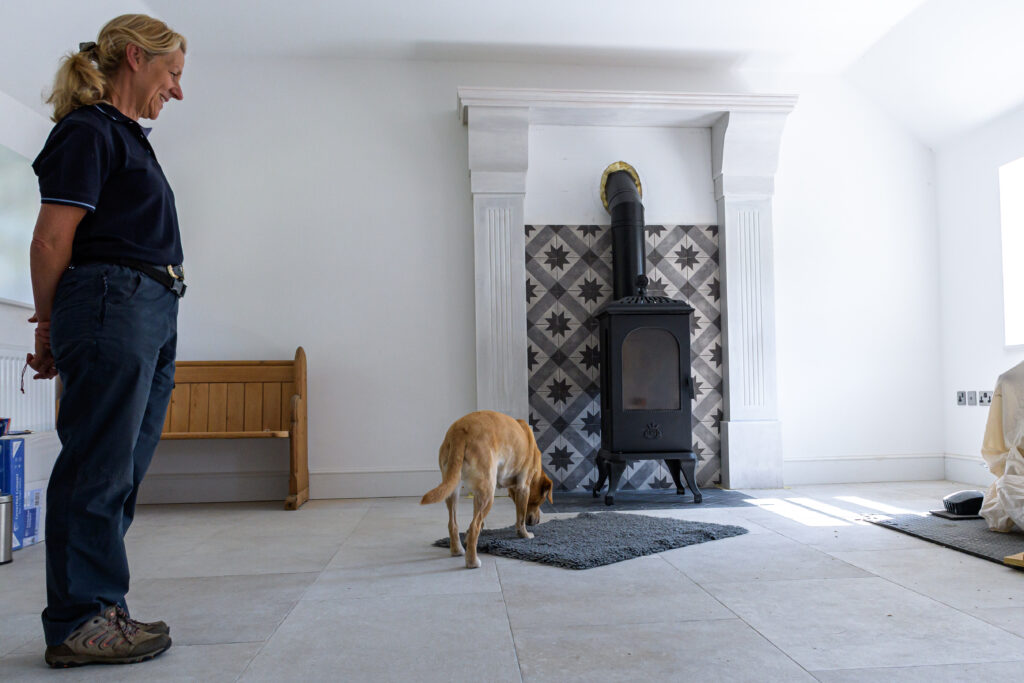
- Wait until your dog places a paw on the mat. Mark the behaviour and reward as before.
- Repeat until your dog is consistently approaching and stepping onto the mat.
- Raise the criteria by waiting for two front paws on the mat. Be patient if they try other behaviours first.
- Avoid over-helping — subtle hints such as looking at the mat or touching its edge can help, but give them a chance to work it out.
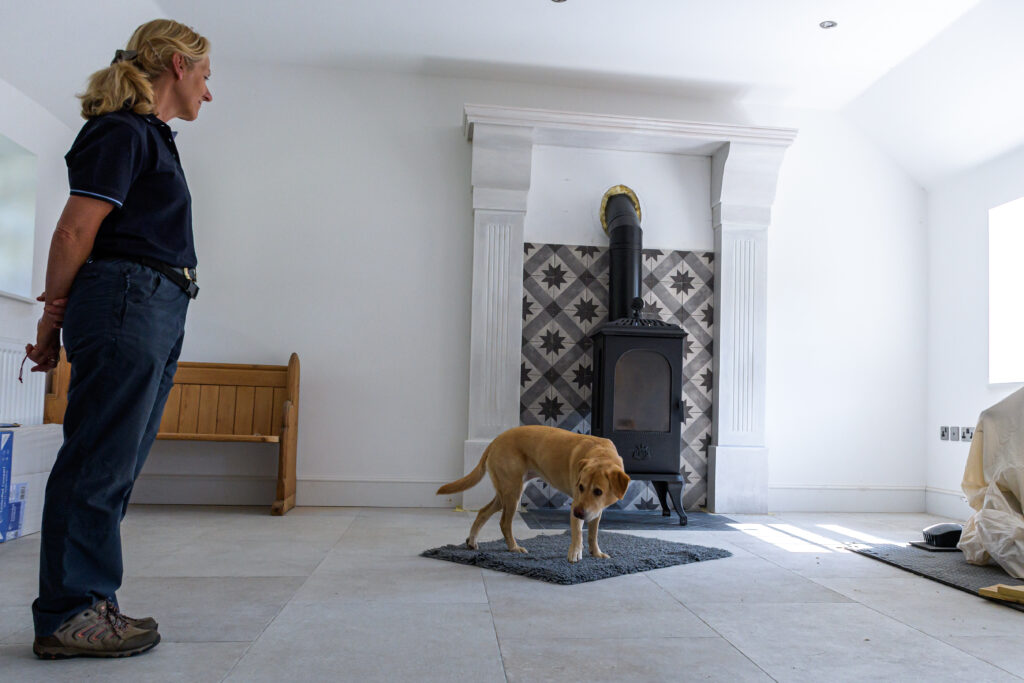
- When they are consistently getting two paws on, wait until three paws are on before marking and rewarding. Continue throwing the treat away from the mat after each reward.
- Shape the behaviour until all four paws are on the mat.
- For especially good progress, give them a “jackpot” reward so they know they have done really well.
- Once consistent, add a verbal cue such as “Go to mat” and optionally a hand signal.
- With the verbal cue, begin dropping the treat on the mat to start the relaxation phase of training.
- Build duration by waiting a little longer before marking and rewarding — start with one second, gradually increasing over time.
- Outside of training, capture the behaviour whenever they voluntarily go on the mat so they learn it always pays off.
- Progress to waiting for them to go into a down posture (or cue “Down” if they know it).
- Shape the behaviour so they lie in a relaxed posture, such as with the hip rolled to one side. Mark and praise when they do this.
- Once they consistently adopt a relaxed posture, add a cue such as “Relax” or “Chill” — be consistent.
- Use the cue just before they naturally perform the behaviour, and pair it with a relaxing touch or another calming stimulus.
- Once they respond consistently, you can fade the structured training but still reward randomly and keep associating the mat with relaxation.