Emergency U-Turn: Redirecting Your Dog Quickly


The emergency U-turn is designed to get a dog out of a problem situation quickly. It is especially useful if you know your dog is close to their reactivity threshold and is too highly aroused to respond to a cue like “Watch Me” or any other command.
It’s important to teach this before using it in a real-life situation. If introduced suddenly, it can startle the dog and may even become a predictor that something scary is about to happen.
The Training Steps
- With your dog on a lead, walk forward and use the verbal cue “This way” in a calm, friendly tone.
- Bend your knees as you turn to avoid dragging them along — particularly important for smaller breeds.
- Use a treat or toy in your hand as a lure to encourage them to follow.
- Turn it into a fun game, rewarding your dog immediately when they follow you.
- The aim is to make a smooth 180-degree turn and walk in the opposite direction.
- Practise in low-distraction environments, gradually building up to more challenging situations. The goal is for your dog to respond to the cue rather than being pulled away.
- Increase the distance they follow you before the reward is given, step by step.
- Randomly practise the U-turn on walks even when nothing is happening. This keeps it normal and prevents it from signalling that trouble is near.
- In real-life situations, try to use the U-turn proactively rather than reactively. Watch your dog’s body language and scan the environment so you can act before they go over threshold.
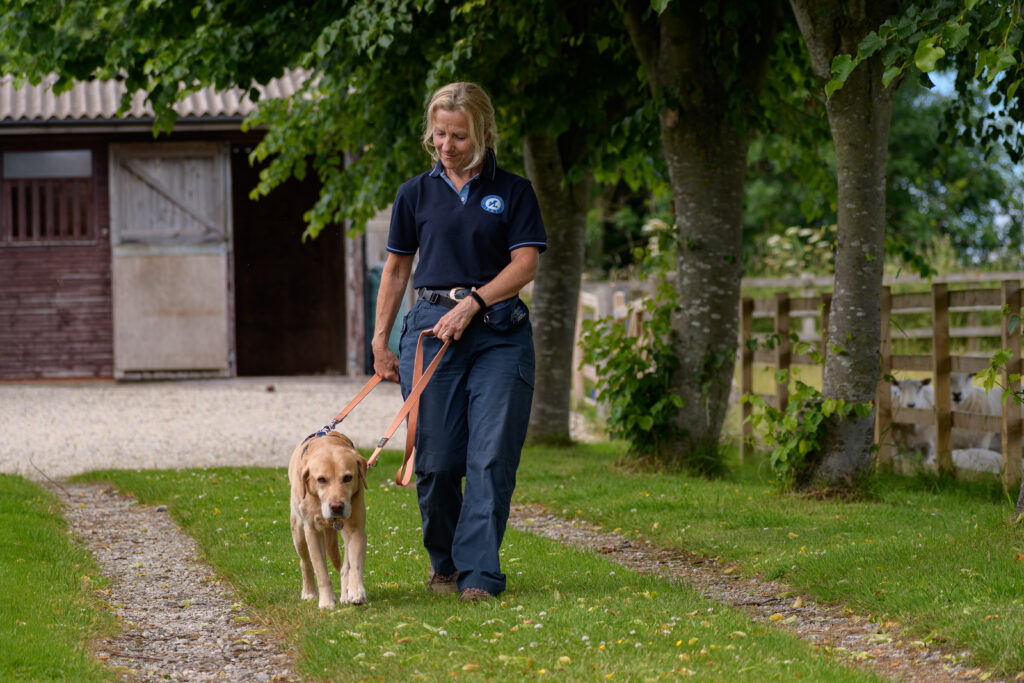
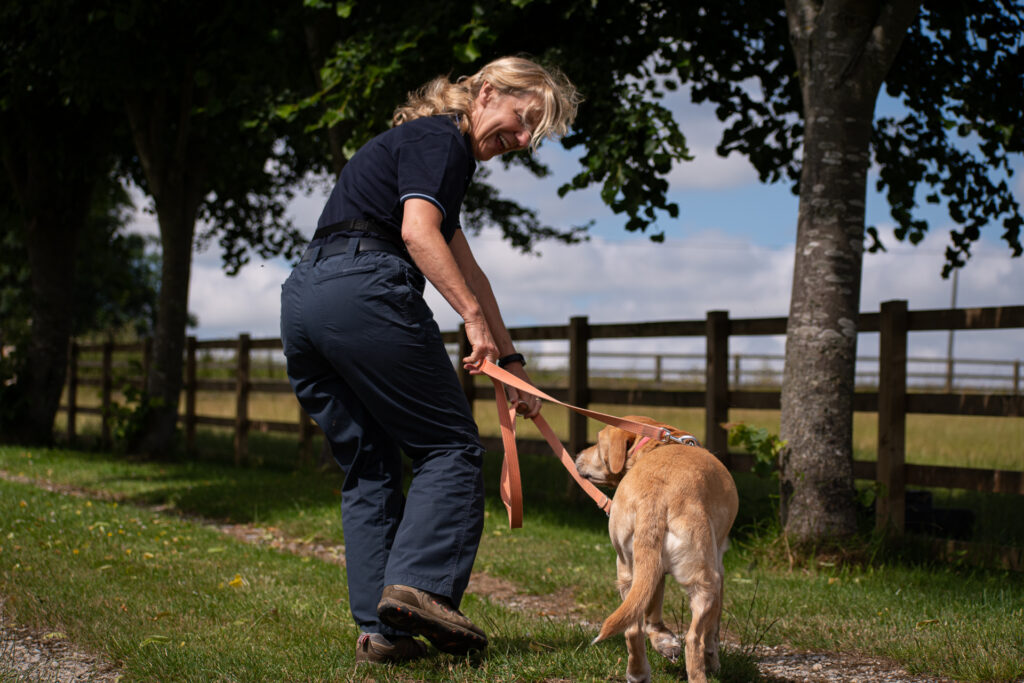
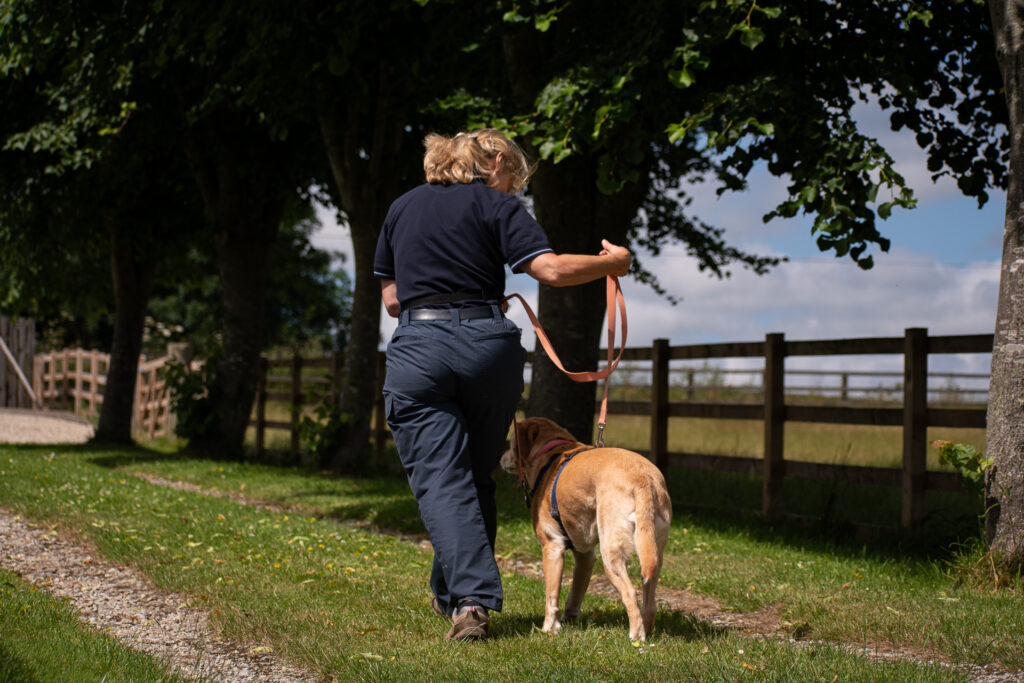
(Guide adapted from Feisty Fido: Help for the Leash-Reactive Dog by Patricia B. McConnell and Karen B. London.)
What do we mean by ‘threshold’?
Threshold is a term used to describe the point at which a dog’s behaviour changes from a positive to a negative emotional state. When a dog is under threshold, they are in a positive emotional state. They react within normal limits and are able to respond to cues. When a dog is at threshold, they have reached the stage of noticing the frightening situation. They may become distracted and look or orientate in the direction of the object of their concern. They can proceed to being over threshold rapidly. Moving them before things escalate is important because once the dog goes over threshold they become completely distracted by the fearful stimulus and display signs of stress, failing to respond to cues and learning to react inappropriately.