

Pattern Games: Creating Calm and Predictability

The concept of pattern games was introduced by Leslie McDevitt, an American-based dog trainer. There are numerous games to choose from, each providing a dog with a predictable and secure structure to follow. Here is one adapted from Leslie’s book Control Unleashed, which is highly recommended.
Benefits
- To get a dog away from something scary.
- To help a dog focus on something else whilst getting past something scary.
- Useful when working on programmes of desensitisation (DS) and counter-conditioning (CC).
- Gives a dog some control over whether they wish to move forward.
The Training Steps
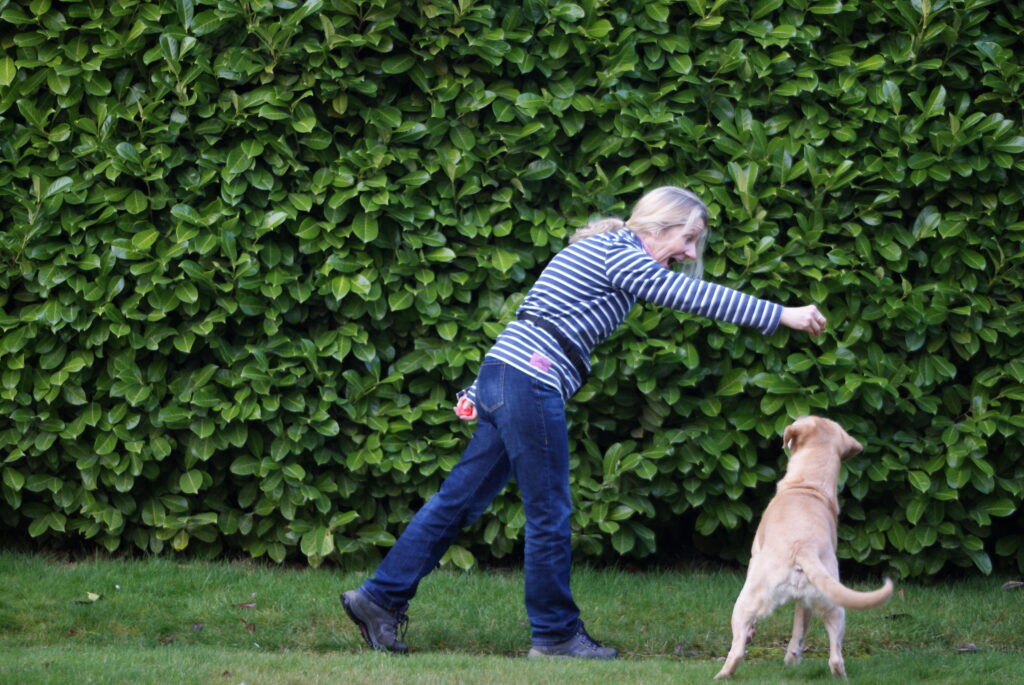
- Get the dog’s interest using their favourite treats. While they are in front of you, say out loud: “One”, “Two”, “Three”, and on “Three”, drop a tasty treat on the floor for the dog to retrieve.
- Repeat this a few times.
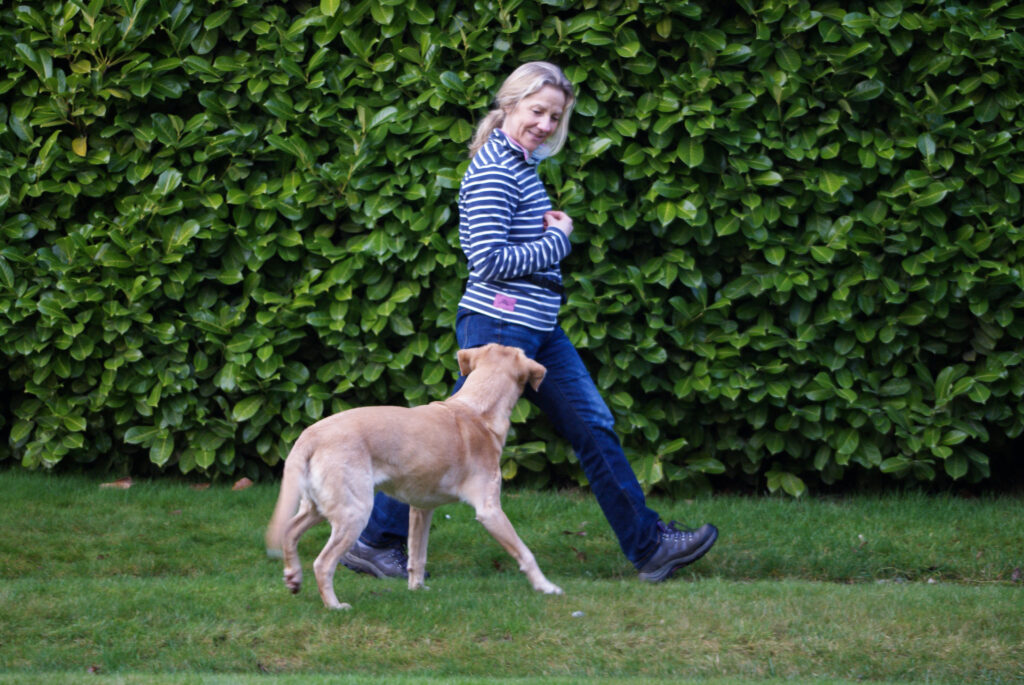
- Add movement — take three steps while counting to three out loud.
- On “Three”, place the treat on the ground and stop.
- Before starting the pattern again, wait for the dog to offer you eye contact.
- Over time, they will start looking up at you, anticipating the sequence.
- The voluntary offering of eye contact dictates when you move forward, giving the dog control over the situation.
- Sequence: One, two — drop the treat on three. Stop. When the dog looks at you, move forward and repeat.
- Create a rhythm and flow to keep their interest, using plenty of encouragement.
- Practise in slightly more distracting environments — if they do not look up, give them a little extra time.
- Gradually increase distractions as they progress.
- Use pattern games during desensitisation and counter-conditioning sessions.
- Pre-empt potential difficulties by using management tools such as the “Emergency U-turn” or “Come Away”.
Variations
- If the dog already knows the “Touch” cue, incorporate it after the count of three before rewarding.
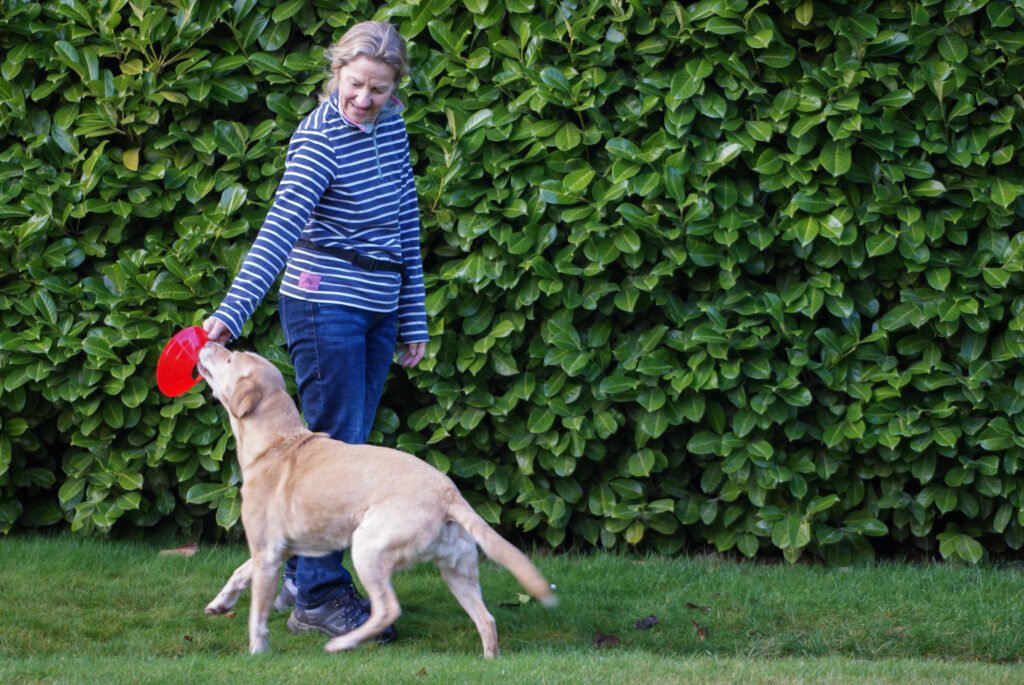
- Use props such as sports cones on the ground or handheld targets for the dog to aim at.
Once mastered, this training can be used whenever you anticipate a challenging situation, helping distract the dog, capture their focus, and guide them away from potential problems.
(Guide adapted from the ‘1, 2, 3 Pattern Game’ in Control Unleashed by Leslie McDevitt.)


