Fear Aggression in Dogs: Expert Tips and Strategies
 Dogs shwoing aggression to one another when off the lead
One of the most common problems I am asked to help with, is “aggression”. However this label can be very misleading.
Aggression is a response to something in the environment. So the important part of helping the animal is to try and find out what is motivating the behaviour.
The most likely cause of aggression is linked to fear. Other causes such as pain or an underlying medical condition may also be involved. Consequently a visit to the vets is crucial.
For dogs, owners often try and expose them to the things they are fearful of. They think that this will help them overcome their fear. Unfortunately, in most cases, this only makes the situation worse. Forcing the dog into a frightening situation can be dangerous and usually makes them more sensitised. This creates more tension which can lead to a bite.
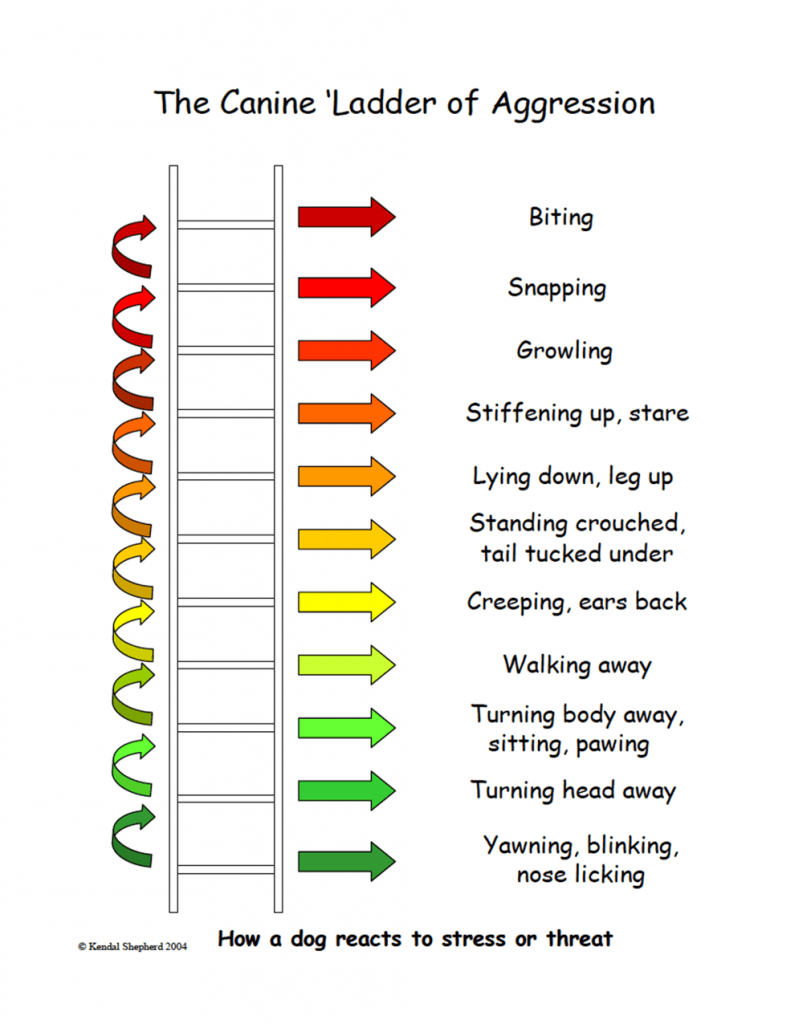
The Canine Ladder of Aggression, designed by Kendall Shepherd, shows how aggression can progress (see Fig. 1). Being able to identify canine body language is a key method of helping prevent problems. There is lots of information on this topic in my book (Fear and Anxiety in Dogs see below).
What can we do for fear aggression?
The list below gives some of the strategies that a behaviour counsellor will usually provide as part of a behaviour plan:
- Identify the underlying cause. You can begin this process by working through my FREE trigger diary: https://www.petcourses.co.uk/free-resources/canine-behaviour-diary-of-triggers-free-download/
- Help a dog feel safe and secure
- Give them space and distance from the fear-evoking stimulus
- Teach the dog a set of alternative behaviours that are incompatible with the behaviour we don’t want
- Teach the dog some relaxation cues
- Provide a structured desensitisation and counter-conditioning training plan
- Modify the diet: e.g. use natural calming supplements
- Provide some stress relieving strategies for the handler. A dog will pick up on their emotions
- Safe-guard the public (and thereby safeguard the dog!).
http://www.theyellowdogproject.com has some great resources for dogs that need more space when out on walks.
These books may help for dogs that exhibit anxiety and fearful aggression towards other dogs:
Feisty Fido

A dog who barks and lunges at other dogs when out for a walk is embarrassing and potentially dangerous. Using these pet-friendly, positive reinforcement techniques you’ll soon be able to relax and enjoy your walks.
View on Amazon
Written by an experienced, registered clinical animal behaviourist, Fear and Anxiety in Dogs looks at understanding, preventing and ultimately treating common behavioural issues found in pet dogs. With the help of real-life case studies and illustrated step-by-step training guides, it explains why problems may develop and what you can do to formulate your own behaviour modification plan. Covering a range of fear-related issues, such as fear of noises, reactivity towards other dogs and people, separation anxiety and trips to the vets, this fully illustrated book is suitable for concerned dog owners, anyone working with dogs in a professional capacity or for those with a genuine interest in canine behaviour.
Want to learn more?
Here’s a selection of our courses which may help with with canine fear, anxiety and aggression: